Feedback and Comments page
More Ampex 600 series info: Most of the Ampex 600 and 601 tape decks/preamps (with the mic transformer) work pretty well with dynamic mics like the classic shure sm-58 and also vintage ribbon mics. In fact, I have never heard a 58 sound as good as it does through the 9er-ized 601. Unmodified 601s still use the 4th amp stage which limits (IMHO) the 601 for general purpose recording. It does provide overdrive capability and is a worthwhile circuit. This stage adds a pot/voltage divider(can be used as an attenuator for overdriving) to lower the signal followed by an amplification stage to bring it back up then the cathode follower. This colors the sound and is less transparent than the Altec 15095 (or other transformer) tapped off after the mic preamp section. If you Google for Ampex 601 you'll see people talking about using it for a special effect - distorted vocal or bass guitar preamp. You'll also find mention of how noisy they are. They can be noisy, but they can also be fairly quiet when they are setup well. The 601 tape decks were only rated at 40 - 15k frequency response. The preamps are diamonds in the rough however, since their circuitry is based on classic tube preamp design incorporating a pentode first stage, followed by a dual triode. In the 601, it has been compromised by size and cost restrictions, as well as the compromises due to the tape electronics. These are some of the reasons the unmodified 350 / 351 sells for 4 times as much as the 601. The 601 is a great candidate for mods and upgrades, though. The belt driven decks like the 601 aren't prized for their mechanical performance, so converting them isn't too frowned upon.
|
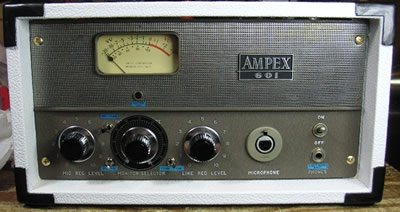
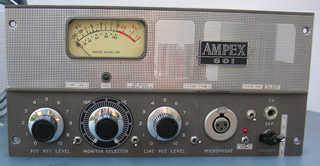
Custom Tube Preamps My favorite: The Ampex 601 The Ampex 600 series were portable tape recorders of high quality, manufactured in the 50's and 60's. The later versions were transistor based and have the "AG" designation. I have little interest in the transistor versions and this site discusses the tube versions only: the 600, 601, and 602. The Ampex 601 takes some of the best features from other Ampexes: the microphone input transformer from the 351, the EF86* based mic input section similar to the MX-35 (followed by a 12AY7 and a 12AU7 cathode follower - some of the most favored circuits among tube heads,) and the classic Ampex build quality. It has serious flaws for modern recording use, but they are fairly easily corrected with various modifications. The coupling capacitors in these units are from various manufacturers: Cornell-Dubilier, Mica-mold, Sprague, etc. Some are worse than others about deteriorating, but they are all paper and mediocre at best after 50 years. *early 601's used a 5879 instead of the EF86 (6267.) These are not interchangeable. The tube socket must be rewired for the EF86 on early units. These pages are intended to be part display and part owner's manual for the the buyers of these units and others which are similar. I have only been doing this work professionally for a few years, but I am starting to get some feedback. Please see the guest book for some customer comments. I despise marketing hype and refuse to do it. I prefer to let my customers express their feelings. I don't know if you'll love a 9er preamp. People have different tastes. For an idea of the kinds of conversions I do:
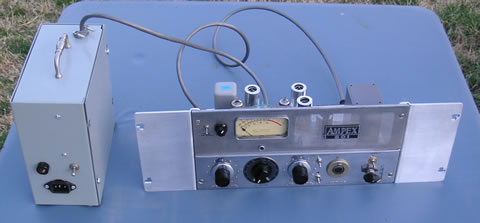
Click here for the: The Ampex 600 series I know that buying a mic preamp at this level is a big investment and buying something like this without hearing it doesn't appeal to a lot of people. Trying to evaluate a preamp in a music store is equally frustrating. That is one reason I have a 30 day satisfaction guarantee. If you don't like the preamp for any reason, it may be returned for a full refund within 30 days, minus the actual shipping costs. So why should you even risk the shipping for a 9er preamp? Because if you do like it as much as I think you will, you will have purchased a preamp that exceeds the performance per dollar of those available in stores, and has a unique sound unlike what others are using. Think of it this way: If you don't like it, you have only rented it for a month to give it a good evaluation. For those that care: I do not chop up decent tape decks for their electronics. I will chop up a unit which is beyond reasonable repair, but I usually get my units already pulled. Yes, I know this still supports the market for chopped up units, but it is where I choose to draw my line. This is the Ampex 601-2 stereo version; the mono version is more common: Ampex 601-2: The electronics section is what interests me. It is only slightly larger than a cracker box: about 6"(15 cm) X 6" X 12" and includes the power supply section. Many Ampexes had a separate power supply for quieter operation. A 9er-ized Ampex 601 preamp: The Ampex 600 and 601 are my favorites. The 602 uses 12AX7 tubes and a Beyer "peanut" transformer which I don't care for. The 602 has decent mylar coupling caps that don't need to be replaced; however, the power supply should be recapped, the Selenium rectifier changed to Silicon and the electrolytic cathode follower output cap replaced. It has some improved shielding in the chassis, and already has DC heater power, so 602's sound doesn't benefit from rebuilding as much as the 601. This doesn't compensate for the differences in the mic transformer and tube architecture to me, though. I like the EF86 designs, just a personal preference and there is no contest between the mic transformers - one is great, the other OK. There are at least a few different versions of the 600/601. The 600's and the early 601's used the 5879 pentode tube for the 1st mic stage. This was upgraded to the EF86/6267 in late 1957. The 600 came standard with unbalanced, transformerless, Hi Z input which limits the unmodified 600 for modern recording applications. There was an optional factory upgrade which added a UTC A-11 trafo for Low Z mics. The 601 came with an octal socket for Altec/Peerless and Ampex branded mic transformers. There are many compatible trafos including some lovely, gold-pinned ones. Standard issue was with a "dummy plug" installed. The mic transformer was an expensive upgrade, and is essential for using these preamps with low impedance mics. A variety of transformers found in the 601 and the 351. Look closely and you'll notice minor and major differences. The square one (UTC) on the right was not an Ampex issue. Why the Ampex 600/601 is cheap compared to the 350/351 1) Most Ampex 601's are missing their input transformers. These "trafos" sell for a pretty penny, usually around $100. They are fairly rare and in high demand because they are used in the Ampex 351 also. Without this trafo, the preamp is not compatible with quality, low Z microphones of any type. People don't know this, they buy one, plug in a shure 58 or something, it sounds terrible so it sits around until they get around to selling it. I have seen a lot of misleading ads on E-vilbay where the seller bragged about the use of this preamp with ribbon mics and how great the sound was, when the one being sold had no transformer and WILL NOT WORK with any good quality microphone, let alone a vintage ribbon. When a website says that the 601 is great with ribbons, they are talking about one with its input transformer, and in good working condition. There is an exception to this and that is when one is using a tube mic with a cathode follower. The output transformer of the mic may be bypassed and the cathode follower fed (unbalanced) into the preamp's tube grid. This is the input situation with a standard Ampex 600, or a 601 with a dummy plug in place of the mic transformer. 2) Because they are small, have AC heater power, and have an included power supply, they are noisier than their 350 series counterparts. Remember that the noise from the preamp would be covered by the noise of the tape in those days. In modern times, we need a preamp that will be quiet when fed into a good audio card or A/D converter. When one tries to add phantom power and a mic pad, the noise gets much worse. Much of my mod work involves making these units quieter (additional filtering, improved grounding, conversion to DC heater power, etc.) 3) They are not rack mountable like the 350 / 351. Of course they can be "racked" but the 350 series is built for standard rack. (I have nice rack ears for my 600/601/602 conversions.) 4) They usually have cables hanging off of them that contain dangerous voltage. 5) The 601 has AC power to the tube heaters, where the 350/351/400/602 have DC heater power, which is quieter. Unfortunately, they use Selenium rectifiers which should be replaced with Silicon. 6) The 601 mixes the mic and line signals at the 2nd tube. While this may have been a cool feature for consumers, it is not a good idea for pro use. The 2 inputs interfere with each other. If you turn the line level pot up, it trashes the sound of the mic signal. Also, after quieting down a 601, one can hear a faint, but annoying crackle even when the line level pot is all the way down. This is caused by the pot sitting there fluctuating a few Ohms as temperature and other factors affect it. Isolating the 2 inputs, and setting the impedance at the grid of the 3rd stage to a fixed value, is an important mod for studio use (IMO.) Without this mod, the interstage impedance changes as the line level pot is changed.
So why did I choose them? 1) They are small enough to carry easily in one hand. They are also light, with a cast alloy faceplate compared to steel in the 350 series. 2) They are well made, all point to point wiring, and they have a nice retro look. The printed circuit boards in the 351 are known to have issues with moisture getting under the printed circuit traces causing crackles and the early boards burn up over time from the heat. The edge connectors for these boards are also problematic. 3) The 350 series uses a push-pull, transformer style output. They incorporate negative feedback in the circuitry which makes stripping out tape related circuits more difficult. The simple voltage divider gain controls of the 601 make things like converting tape circuits to other uses easier. The 601 uses a cathode follower output circuit with a tiny transformer for balanced output. The 600 only has the cathode follower with no transformer which makes it unbalanced output only. It should be noted that this sounds very nice when plugged into a modern mixer, soundcard, etc. The 601 has the same output as the 600 in the form of the mono Phones jack on the front. This Hi-Z output provides yet another color for the 601 since it does not go through the output transformer. 4) The later 601's use an EF86 pentode ----> 12AY7 circuit which is the circuit I clone. This circuit is not of the highly colored variety*, but more the clean and airy type of tube mic preamp. However, the output amplifier/cathode follower compromises the potential of the mic preamp design. The extra tube and circuitry veils the sound of the preamp a little bit. Also, many people set the calibration pots to drive the tubes for a very colored sound. When stripped down to the mic preamp only, these units can produce a very clean sound with great presence. The cathode follower section allows tube overdriving for a wide range of sounds from clean to nasty. 5) Because of the compromises Ampex was forced to make in order to satisfy the marketing requirements for a portable tape recorder, these are great candidates for upgrades. With my modifications, they are quiet, gorgeous sounding, versatile, mic/line/instrument preamps that look almost as good as they sound. (Gosh, that's skating mighty close to marketing hype there, Jimbo.) 6) Single ended circuits with no negative feedback have been slowly becoming more popular over the years. I believe this has to do with the transparency and airiness these circuits can convey. I believe Aural Exciter technology was inspired by the type of distortion produced by such circuits. I have seen no proof of this, only forum posts and such. This chart shows the typical frequency response curves of a 9er-ized 601. Please notice that I didn't use the common marketing trick of setting the dB scale to make this look flat. The vertical divisions are only 4 dB, so you can actually see the variations. I've pushed the frequency response of these preamps down to about 10 Hz in an attempt to minimize phase distortions in the audible low end. I'm very happy with the bass sound I get using this preamp.
Here are some pictures from a renovation/cloning process: |
||||||||||||||
|